Who We Are
A niche consulting firm dedicated to helping organizations navigate complex business challenges and accelerate growth. We partner closely with leadership teams to deliver tailored, actionable strategies that drive measurable results, ensuring our clients receive the precise insights and execution needed to succeed in today's competitive landscape.
How we think and work
How do we work with clients?
Most consultants arrive with a deliverables list. We do not work that way. Every transformation starts with the people, so before anything else, we focus on shifting how your team thinks and reducing the instinctive resistance to change that kills most initiatives before they gain traction. No process redesign or technology rollout survives a team that has not bought into why things need to change.
Once people are aligned, we look at processes. Not what your competitors are doing. Not what your IT systems can accommodate. Your processes should be designed around one thing: serving your customer in the most efficient and cost-effective way possible. If your current systems cannot support the processes your business actually needs, those are not the right systems.
Technology comes last. We consider it a business enabler, not a destination. Treating it as a target is one of the most common and most expensive mistakes we see organizations make.
People first, then process, then technology. In that order, every time.
What kind of engagement do we take on?
The short answer is: the full spectrum.
We work with early-stage startups that are trying to figure out what transformation even means for them at their stage. We work with mid-sized enterprises navigating growth that their current systems and processes were not built for. And we work with large, complex entities where the stakes are high, the stakeholders are many, and the tolerance for getting it wrong is low.
The common thread is not the size of the organization. It is the seriousness of the leader. The engagements we take on are with people who have a real problem, have already tried the obvious answers, and need someone in the room who will tell them what they actually need to hear rather than what is easiest to say.
We do not take on engagements where the client wants a report to file, a box to tick, or a vendor to blame if things go wrong. That is not what we do.
What do we believe in that most firms in our field do not?
That transformation is a human problem, not a technology problem. Most of the industry is focused on platforms, systems, and technology stacks. The conversations are about which ERP to implement, which cloud provider to migrate to, which AI tool to layer on top. The assumption, rarely stated but always present, is that if you get the technology right, the transformation follows. It does not.
The organizations we have seen fail at transformation did not fail because they picked the wrong vendor. They failed because the people who were supposed to use that system, champion it, adapt their behavior around it, never genuinely bought in. The technology worked. The transformation did not.
The human side is harder to measure, harder to report on, and harder to sell as a consulting engagement; that is why most firms in this field avoid it. We believe that is exactly why it keeps being the reason things go wrong.
What challenges are we currently addressing or working on?
Two things are at the top of our list right now, the first being SME compliance to the UAE e-invoicing framework, alerting SMEs to the risks of non-compliance, because they're treating their own 1 July 2027 go-live as the starting line, when the real pressure will hit six months earlier. The second being Business continuity in government enterprises, and the importance of not treating it as a compliance exercise or an IT risk management framework, but as a governance obligation that most government leaders have not fully accepted yet.
The question we keep coming back to is this: when a private company fails to deliver, customers go elsewhere. When a government entity fails to deliver, citizens wait, and the most vulnerable ones wait the longest. That asymmetry changes everything about how continuity needs to be planned, resourced, and owned at the leadership level. That are top two challenges we are writing about, advising on, and thinking through right now.
Our People
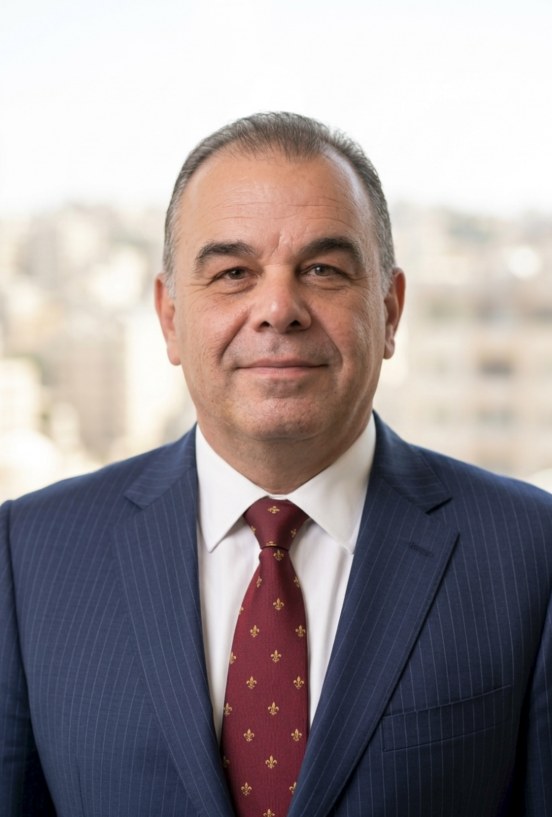
Meet some of the people behind the name.



What we commit to
Quality, clarity, and long-term relationships guide both practices, whether we are advising a government entity on transformation or sourcing an authenticated product for the Jordanian market.